
Emerald vs Diamond: Which Is More Worth the Money?

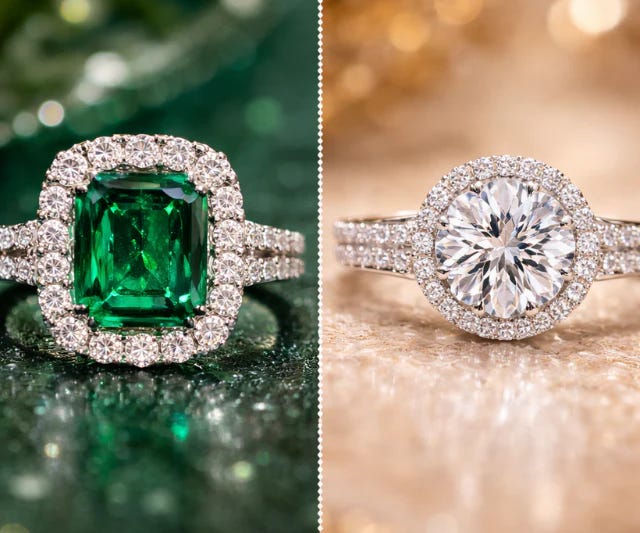
When you’re planning to invest in fine jewellery, especially something as meaningful as an engagement ring or a statement piece, value matters just as much as beauty. Emerald vs Diamond: Which Is More Worth the Money? is a question that savvy buyers increasingly ask especially those who want both emotional satisfaction and smart financial sense from their gemstone purchases. In this comparison, we’ll break down key factors like cost, long-term value retention, quality variables, and emotional appeal to help you decide which gemstone offers the best return on your investment.
💎 Cost Comparison: Upfront Price Differences
The first thing most buyers consider is price. Generally, diamonds tend to be more expensive than emeralds on a per-carat basis, especially for higher grades of colour and clarity. Diamonds are graded on the globally recognised 4Cs (cut, colour, clarity, carat), which makes pricing more standardised.
Emeralds, however, don’t follow that exact same scale. Their price depends heavily on:
Intensity and uniformity of green colour
Size and visibility of internal inclusions
Whether they’ve been treated with oil or resin to enhance clarity
Because high-quality emeralds with rich green colour and fewer inclusions are rare, they can sometimes cost more than diamonds of similar size. But many emeralds on the market have visible inclusions that naturally lower their price, making them comparatively more affordable.
📉 Longevity & Durability: Wearability Affects Value
One of the biggest factors in gemstone value is how well it stands up over time.
Diamonds are the hardest natural gemstone , meaning they resist scratches and everyday wear extremely well. This is why diamonds have long-term appeal for jewellery that’s worn daily, like engagement rings.
Emeralds, by contrast, are softer (typically 7.5–8 on the Mohs scale) and often feature natural inclusions that make them more delicate. This makes them more prone to chipping or cracking if knocked against a hard surface.
👉 What this means for value:
Diamond jewellery usually maintains its beauty longer with less maintenance.
Emerald jewellery can require more careful handling and occasional professional cleaning.
📈 Resale Value & Investment Potential
If you’re wondering which gemstone holds or increases value over time:
💠 Diamonds
Strong resale market: Especially for certified stones from reputable labs (like GIA).
High liquidity: Diamonds are widely recognised and easier to sell or trade.
Stable pricing trends: The global diamond market is well established.
🍃 Emeralds
More niche resale market: Fewer buyers and more subjective pricing.
Less consistent valuation: Harder to standardise because colour and inclusions vary widely.
Rare top quality emeralds can appreciate: Especially museum-quality stones or those with exceptional colour and size.
👀 Bottom Line: Diamonds generally have better resale and long-term investment potential because of market stability and recognisability.
💎 Aesthetic & Emotional Value
Value isn’t just financial emotional worth matters too!
Emeralds are exceptional for buyers who:
Love vibrant, luxurious green
Want something distinctive and unique
Prefer stones with personality and history
Diamonds, on the other hand, appeal to buyers who:
Value sparkle and brilliance
Want a classic, timeless look
Are investing in jewellery meant to last decades
✨ Verdict: For most buyers looking for long-term financial worth and durability, diamonds offer better overall value. However, for those who prioritise unique beauty and emotional resonance, emeralds can be more “worth the money” especially if you choose a high-quality stone that speaks to your personal taste.